A new study suggests that men with heart problems may have double the risk of death if they also suffer from erectile dysfunction...At least he admits how little they know.
The researchers found that treatments for the heart disease did little to help men suffering erectile dysfunction, but the erectile dysfunction itself was associated with a death rate almost twice that of men not suffering erectile dysfunction, as well as a doubled risk of heart attack...
"This study adds greatly to what we know about ED and mortality risk, which is relatively little at this point," said Andre Araujo, director of epidemiology for the New England Research Institute.
Saturday, March 20, 2010
Erectile Dysfunction May Indicate Doubled Death Risk
Well this is comforting.


ASA: High Fat Intake Ups Stroke Risk in Older Women
Kudos, fatsettes.
Postmenopausal women who eat the most fat have an elevated risk of ischemic stroke, researchers found.Eat hearty.
Those who ate the most total fat -- a median of 95 grams/day -- were 44% more likely to have an ischemic stroke than those who ate the least -- a median of 25 grams/day (HR 1.44, 95% CI 1.00 to 1.90, P=0.02 for trend), according to Sirin Yaemsiri, MSPH, a doctoral student at the University of North Carolina at Chapel Hill.
Women who ate the most trans fat -- a median of 7.5 grams/day -- also had an elevated stroke risk (HR 1.30, 95% CI 1.00 to 1.70, P=0.03 for trend) compared with those who ate the least -- a median of 1.3 grams/day, Yaemsiri reported at the American Stroke Association meeting here.
Yaemsiri said the findings support the American Heart Association recommendations to limit trans fat intake to less than 1% of total energy consumption.
Commenting on the study, Emil Matarese, MD, director of the stroke center at the Saint Mary Medical Center in Langhorne, Pa., said, "I think women now need to recognize that they have risk of stroke just like a man, and it may be too late if a woman waits until they're menopausal to adjust their diet."
"We need to start early at recognizing what are our risks and eliminating the excess fat, especially trans fat," he added.
Younger women have a lower stroke risk than men of similar age, a relationship that reverses after menopause.
Friday, March 19, 2010
U.S. kids even fatter than believed
The experts were wrong, again. Imagine that. Shelf life expired. More and worse nutritional child abuse.

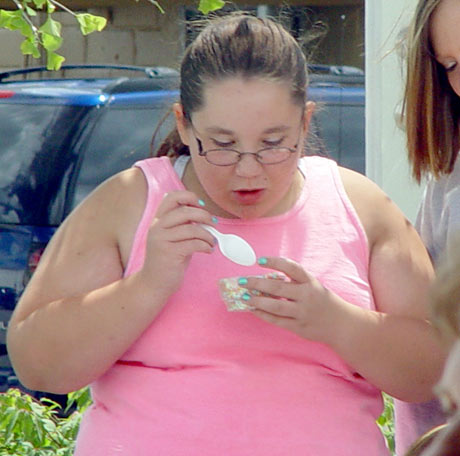
If you want to UNsuccessfully fight all overweight/obesity in kids and adults, then follow these role models:
Role model:


Role modelette, Michellesie "The First Fatty" Obama:

.jpg)




Extreme obesity among American children is much worse than previously believed, putting them at greater risk of serious health problems as they age, U.S. researchers said on Thursday.If you want to successfully fight all overweight/obesity in kids and adults, then go here.
A study of more than 700,000 children and teens in southern California found that more than 6 percent, or 45,000, were extremely obese and more boys than girls were far too heavy, the researchers reported in the Journal of Pediatrics.
"This study is unique because it is the first time that we've had a large up-to-date snapshot of what's happening with obesity in our children," co-author Dr. Amy Porter of Kaiser Permanente health care system said in a video statement.
"The prevalence of obesity in children is much higher than we ever thought it was" Porter said. She said the study also showed that extreme obesity was rising in almost every group.
If you want to UNsuccessfully fight all overweight/obesity in kids and adults, then follow these role models:
Role model:
Role modelette, Michellesie "The First Fatty" Obama:
ACC: NAVIGATOR Confirms Diet and Exercise Still Best
More OOPs, different study, same fix.
Still think they have any idea what they are doing?
Two strategies aimed at preventing cardiovascular events in high-risk patients -- use of an angiotensin receptor blocker or a short-acting insulin secretagogue for five years -- failed to reduce myocardial infarction or stroke, researchers here reported...Now they tell you.
Nathan concluded that, for now, "we should steer away from these two drugs and use effective lifestyle interventions and, in selected persons, metformin to combat the epidemic."
Still think they have any idea what they are doing?
High Hospital Occupancy Confers Increased Inpatient Mortality Risk
In other words, arguably the greater the access to sick care and hospitalization, the less the likelihood of survival.
To varying degrees, higher hospital occupancy, lower nurse staffing levels, weekend admission, and admission during high seasonal influenza activity all independently increase the risk of dying in the hospital, according to a study published in Medical Care this month.Oops.
"The increased risk of mortality conferred by each of these factors is not small...
Impotence plus heart disease ups death risk: study
Guess who gets heart disease and perpetually flaccid penises most.
Hint:

If you are a man and both your heart and your penis are diseased, "Why live?", one might ask.
These are, of course, in addition to the diseased brain that got you fat to begin with.
Hint:
Men with heart disease who also complain of erectile dysfunction die sooner than other male heart patients, researchers reported on Monday.Welcome relief.
They found that men who had both conditions were twice as likely to die from any cause and twice as likely to have a heart attack than men with heart disease alone.
If you are a man and both your heart and your penis are diseased, "Why live?", one might ask.
These are, of course, in addition to the diseased brain that got you fat to begin with.
Thursday, March 18, 2010
Mortality Rate in Older Adults Persistently Increased 5- to 8-Fold After Hip Fracture
Two words - Anabolic Clinic (sm).
It is best to build, retain and maintain bone when older through fitness with anabolic help.
Note that although osteoporosis is generally associated with women, not only do men get it, they die at higher rates than women.
All-cause mortality rate in older adults is increased 5- to 8-fold 3 months after hip fracture and persists with time, according to the results of a meta-analysis reported in the March 15 issue of the Annals of Internal Medicine...It is best to build bone through fitness when young.
"Older adults have a 5- to 8-fold increased risk for all-cause mortality during the first 3 months after hip fracture," the study authors write. "Excess annual mortality persists over time for both women and men, but at any given age, excess annual mortality after hip fracture is higher in men than in women."
It is best to build, retain and maintain bone when older through fitness with anabolic help.
Note that although osteoporosis is generally associated with women, not only do men get it, they die at higher rates than women.
ACC: Close Lipid and BP Control Fail in Diabetes
And the OOPs just keep on coming.
Intensive blood pressure and lipid managment does little against elevated cardiovascular risk in diabetes, according to results from the ACCORD study, again proving lower isn't always better.Better to be fit than get killed by the sick care system's efforts at "helping" you.
Using a blood pressure target of 120 mm Hg rather than the general population standard of 140 did not reduce the primary outcome of nonfatal MI, nonfatal stroke, and death from cardiovascular causes (1.87% versus 2.09% per year, hazard ratio 0.88, P=0.20), reported William C. Cushman, MD, of the VA Medical Center in Memphis, Tenn.
Agriculture Secretary Tom Vilsack Addresses The School Nutrition Association, Issues Call To Action For Child Nutrition Stakeholders
Well, this will get the job done. Once the "Sack" is on it together with the SNA, fatso kids lookout!
Agriculture Secretary Tom Vilsack spoke to the School Nutrition Association and highlighted the Obama Administration's priorities for the reauthorization of the Child Nutrition Act and issued a call to stakeholders to improve the health and nutrition of our nation's children. To highlight the nexus between nutrition and physical activity and USDA's collaboration with First Lady Michelle Obama's Let's Move! initiative, Secretary Tom Vilsack issued a call to action to parents, community leaders, schools and elected officials to improve the nutrition and physical activity habits of our children by working together to double the number of HealthierUS Schools across the country.More crap from the "junk food eatin'," overweight-spoused, administration chief.
"The reauthorization of the Child Nutrition Act is an important opportunity to improve the health of our children and reduce hunger in this country but the federal government cannot do it alone because it's people who work in our schools that are on the front line of providing healthier meals, nutrition education and enabling more physical activity," said Vilsack. "I am challenging parents, educators, nutrition experts, and community leaders to join us in doubling the number of HealthierUS Schools across the country in the next year because we all have a stake in improving the health and nutrition of our children."
The Obama Administration has proposed a historic investment of an additional $10 billion over ten years starting in 2011 that will allow for the improvement of the quality of the School Lunch and School Breakfast Programs, increase the number of kids participating, and ensure schools have the resources they need to make program changes, including training for school food service workers, upgraded kitchen equipment, and additional funding for meal reimbursements for schools that are enhancing nutrition and quality. Additionally, this investment will allow additional fruits, vegetables, whole grains, and low-fat dairy products to be served in our school cafeterias and an additional one million students to be served the healthy diets in school.
Already, the administration has announced its plans to improve school meals, a financing initiative to reduce food deserts, new research tools that detail local food environments and health outcomes, including grocery store access and disease and obesity prevalence, and a broad range of public/private partnerships to solve America's childhood obesity epidemic.
Speaking of "sacks"...
Role model and role modelette:
Role model:
Role modelette:
Role model and role modelette:
Role model:
Role modelette:
Wednesday, March 17, 2010
ACC: Pushing Blood Pressure Too Low May be Harmful
Oops.
Lower is not necessarily better for blood pressure control in patients with diabetes and coronary artery disease, a secondary analysis of a randomized trial showed...Still think they have any idea about what they are doing?
Patients who were most tightly controlled, however, had an increased risk of all-cause mortality compared with those in the middle range, during both the trial and an extended follow-up of about five years.
Diabetes Slows Return of Continence After Laparoscopic Prostatectomy
Hey, fatsos. Now you can piss yourself longer than intended-size humans after your operation.
Kudos, fatsos. Diapers, anyone?

Patients with diabetes mellitus who undergo laparoscopic radical prostatectomy often experience a slower return of urinary continence than do men without diabetes, European researchers report.Type 2 diabetes, the more common form comprising 95% of diabetics, is fat person diabetes.
The study, which is published in the Journal of Urology for March, found that 43.7% of diabetic patients are continent within 3 months of surgery compared with 57.8% of non-diabetics (p = 0.02). By 12 and 24 months, however, the differences are no longer statistically significant.
The findings also suggest that among diabetics, those who've had the disease for 5 years or longer are nearly five times more likely to have post-prostatectomy incontinence than are those with a shorter disease duration. In addition, an elevated HbA1c value was predictive of incontinence on long-term follow-up.
"Urinary incontinence remains a clinically important complication after radical prostatectomy and has a significant negative impact on patient quality of life," senior author Dr. Jens Rassweiler, from SLK Kliniken Heilbronn, Germany, and colleagues note. "A wide range of continence rates has been reported after radical retropubic prostatectomy (67% to 95%) and laparoscopic prostatectomy (60% to 100%)."
Kudos, fatsos. Diapers, anyone?
Overweight Middle-Aged Adults at Greater Risk for Cognitive Decline in Later Life
No "Overweight Middle-Aged Adults at Greater Risk for FURTHER Cognitive Decline in Later Life."
The adverse affects of being overweight are not limited to physical function but also extend to neurological function, according to research in the latest issue of The Journals of Gerontology Series A: Biological and Medical Sciences.Fat people clearly already had cognitive decline earlier in life which explains why they are fat people.
The publication presents a collection of ten articles highlighting new findings related to obesity in older persons.
"One of the unanticipated consequences of improved medical management of cardiovascular disease is that many obese individuals reach old age," said Journal of Gerontology: Medical Sciences Editor Luigi Ferrucci, MD, PhD, of the National Institute on Aging. "We need a better understanding of the causes and consequences of obesity in older individuals -- especially when obesity is associated with sarcopenia."
A study headed by Anna Dahl, MS, of Sweden's Jönköping University, found that individuals with higher midlife body mass index (BMI) scores had significantly lower general cognitive ability and significantly steeper decline than their thinner counterparts over time.
Tuesday, March 16, 2010
No quick drug fix for high diabetes risk
Wonderful news! Remember that Type 2 diabetes is fat person diabetes.
Two. Completely free and accessible-to-all "treatment" methods are the ones that work.
And the study was extensive.
Two key treatments do not halt diabetes in people with early signs of the disease, a large study has found.One. Now we can stop paying for fatsos' drugs since they do not work.
Researchers said the results showed the only way to ensure future health in people at high risk of diabetes was exercise and a healthy diet...
Everyone taking part in the study, published in the New England Journal of Medicine, had been diagnosed with what doctors call "impaired glucose tolerance". (sic)
It effectively means that people have high blood sugar and their bodies are starting to not respond to insulin as well as they should.
Sometimes called pre-diabetes, it is thought that the condition is a stage in the development of full-blown type 2 diabetes, and can be associated with obesity.
Two. Completely free and accessible-to-all "treatment" methods are the ones that work.
And the study was extensive.
In the trial, researchers in the US and UK looked at whether using a drug that lowers blood pressure or a drug which lowers blood sugar could be used to stop diabetes developing in these high-risk patients.The conclusion remains and will always be:
But the results, from patients in 40 countries, found no great difference in how many people went on to get diabetes when prescribed either drug compared with a dummy pill.
Neither did the drugs prevent future heart attacks and strokes, which are dangerous complications of the condition.
In the blood-sugar lowering drug part of the study around a third of people went on to develop diabetes within five years whether they were taking the real medicine or dummy medicine.
He said: "The most successful treatment for someone at high risk of diabetes is diet and exercise."Get fit.
Hospitals find need for new equipment to adapt to obesity trend


This is a big reason why you are expected to pay more for sick care in the USA (and other places, too.)
Twice in the 14 months since St. Vincent Healthcare installed a new CT scanner, trauma patients have been flown in from other parts of the state to use it.Send them to the zoo - a place equipped to handle fat people.
That’s not because the machine produces more powerful images or because the radiologists who interpret them are more skilled than in other places. The injured people were brought to Billings because they could not fit inside CT scanners closer to home.
St. Vincent’s machine can accommodate patients weighing up to 650 pounds, about 200 pounds more than most CT scanners in the state.
“We have had patients who rub against the sides as they go through,” said Dustin Strandell, the hospital’s special imaging supervisor. “Anymore, we always go with the heaviest equipment we can get.”
From waiting-room furniture and hospital gowns to wheelchairs and blood pressure cuffs, medical facilities all over the country are investing in larger and sturdier equipment for an ever-growing population of obese patients.
It is astonishingly expensive.
By one estimate, spending on heavy-duty stretchers will reach $50 million in 2012, up from $29.6 million in 2004.
Sales of mechanical lifts, which help caregivers move bedridden patients, will reach $193 million a year by 2012, according to a report published in the Journal of Emergency Medical Services.
And the cost of caring for large patients is not limited to equipment. Extra staff is often needed to move or lift big people, and caregivers are more likely to suffer back and other injuries when handling obese patients.
“We talk about escalating health care dollars,” said Dr. Christopher Sorli, director of endocrine services at Billings Clinic.
“Look who’s walking in the door. These people utilize health care dollars so much more than people who are not obese, particularly when the health care dollars are going to buy bigger equipment.”
In Obese, Overweight People, Weight-Loss Diets May Reverse Atherosclerosis
One meaningful point here.
Drop the pounds.
A low-carbohydrate diet, a low-fat diet and the Mediterranean diet were equally effective in helping obese people to reverse carotid atherosclerosis after losing moderate amounts of weight and improving their blood pressure, in a study reported in Circulation: Journal of the American Heart Association.It is the weight loss, not the diet.
Researchers at Ben-Gurion University of the Negev, the Nuclear Research Center and Soroka Hospital in Israel investigated whether diet could reverse atherosclerosis, a slow, progressive condition in which the arteries thicken with plaque buildup, increasing risk of heart attacks and strokes. The research team compared the three diets among overweight participants, mostly men, who were at high risk for atherosclerosis.
After two years, researchers noted a significant 5 percent regression in average carotid vessel-wall volume and 1.1 percent decrease in carotid artery thickness.
Compared to participants who had increased carotid wall volume, those with decreases had other improvements:greater weight loss (11.7 pounds versus 7 pounds);The researchers said, beyond drug treatment, the data is some of the earliest showing the potential of diet as a lifestyle modification strategy to prevent atherosclerosis. The findings indicate that sustained, moderate weight loss - not the macronutrient content of the different diets - leads to improved cardiovascular health.
decreased systolic blood pressure levels (6.8 mmHg versus 1.1 mmHg);
improved homocysteine levels; and
an increase in apolipoprotein A1 (Apo A1), the major component of "good" cholesterol.
Drop the pounds.
Monday, March 15, 2010
Studies on Nutrients, Gene Expression Could Lead to Tailored Diets for Disease Prevention

I am still waiting for the jet packs. (not prototypes, but the real, practical, consumer version)
Personal health recommendations and diets tailored to better prevent diseases may be in our future, just by focusing on genetics.I am sure that this osteopathy student is qualified to predict the future.
Researchers at Kansas State University recently published an academic journal article discussing the potential for nutrigenomics, a field that studies the effects of food on gene expression. The researchers discussed the possibility of using food to prevent an individual's genes from expressing disease. The researchers said nutrigenomics could completely change the future of public health and the food and culinary industries.
"Nutrigenomics involves tailoring diets to someone's genetic makeup," said Koushik Adhikari, K-State assistant professor of sensory analysis. "I speculate that in five to 10 years, you would go to a genetic counselor or a physician who could help you understand your genetic makeup, and then a nutritional professional could customize your diet accordingly."
Adhikari collaborated with Denis Medeiros, professor and department head of human nutrition, and Jean Getz, former K-State graduate student in human nutrition, for an article on nutrigenomics that was published in the January issue of Food Technology. Getz, now a student at the School of Osteopathic Medicine at Michigan State University, wrote the article while at K-State.
And, after all, there are only about 6000 genes identified so far involved with fatosity.
That represents a mere around 25% of the entire known human genome.
And we all know how successful modern science has been in dealing with genetic matters involving far fewer genes.
That is why baldness has been cured.

Of course, just consider that these prophets are the same people who cannot cheaply, effectively and safely cure toenail fungus.

That should put this prediction in perspective.
Unless you are an idiot.
Like each of these researchers.
Discovery of 'Fat' Taste Could Hold the Key to Reducing Obesity
This is it. Really. This time it really is the "key." Really.
Foods with an even more intense fatty taste?
Can't wait.
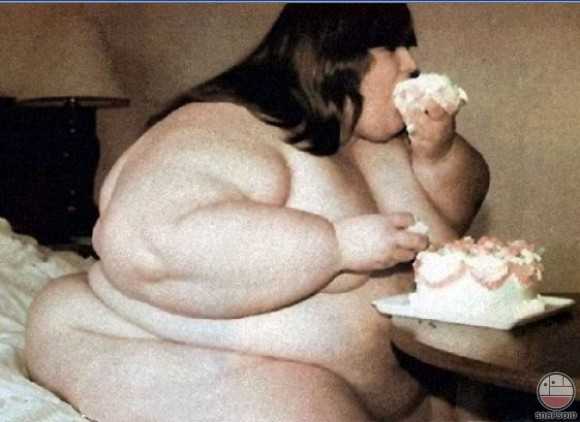
Insensitive person:
A newly discovered ability for people to taste fat could hold the key to reducing obesity, Deakin University health researchers believe.The solution?
Deakin researchers Dr Russell Keast and PhD student Jessica Stewart, working with colleagues at the University of Adelaide, CSIRO, and Massey University (New Zealand), have found that humans can detect a sixth taste -- fat. They also found that people with a high sensitivity to the taste of fat tended to eat less fatty foods and were less likely to be overweight. The results of their research are published in the latest issue of the British Journal of Nutrition.
"Our findings build on previous research in the United States that used animal models to discover fat taste," Dr Keast said.
"We know that the human tongue can detect five tastes -- sweet, salt, sour, bitter and umami (a taste for identifying protein rich foods). Through our study we can conclude that humans have a sixth taste -- fat."
The research team developed a screening procedure to test the ability of people to taste a range of fatty acids commonly found in foods.
They found that people have a taste threshold for fat and that these thresholds vary from person to person; some people have a high sensitivity to the taste while others do not.
"Interestingly, we also found that those with a high sensitivity to the taste of fat consumed less fatty foods and had lower BMIs than those with lower sensitivity," Dr Keast said.
"With fats being easily accessible and commonly consumed in diets today, this suggests that our taste system may become desensitised to the taste of fat over time, leaving some people more susceptible to overeating fatty foods.
"We are now interested in understanding why some people are sensitive and others are not, which we believe will lead to ways of helping people lower their fat intakes and aide development of new low fat foods and diets."
Foods with an even more intense fatty taste?
Can't wait.
Insensitive person:
Relationship Between Extremes In Sleep Duration And Increases In Abdominal Fat In Minority Young Adults
Goldilocks research.
Also note what is considered "extreme."
More than 7 hours sleep is "extreme."
So much for the 8 hours per night.
There will never be a way to "get it right" as long there is money for crappy research.
A study in the March 1 issue of the journal SLEEP shows that African-American and Hispanic young adults with short or long sleep durations had greater increases in belly fat over a five-year period compared with those who reported sleeping six to seven hours a night.Note that both "too much" and "too little" sleep are the culprits.
Also note what is considered "extreme."
More than 7 hours sleep is "extreme."
So much for the 8 hours per night.
There will never be a way to "get it right" as long there is money for crappy research.
Sunday, March 14, 2010
Snacks turn kids into ‘constant’ eaters
Aren't six or so feedings a day the advice that AdipOprah's weight loss experts recommend? (Answer: "Yes.")
Yet, people follow the advice of this fatso who cannot lose weight when it comes to losing weight.
The greater fool theory in action.
U.S. children eat an average three snacks a day on top of three regular meals, a finding that could explain why the childhood obesity rate has risen to more than 16 percent, researchers said on Tuesday.Another bad outcome explained by the fact that AdipOprah is a friggin' idiot with a large pulpit, large following and large ass and she is too large an incompetent to know what is right.
Children snack so often that they are "moving toward constant eating," Carmen Piernas and Barry Popkin of the University of North Carolina reported.
More than 27 percent of calories that American kids take in come from snacks, Piernas and Popkin reported in the journal Health Affairs. The researchers defined snacks as food eaten outside regular meals.
Yet, people follow the advice of this fatso who cannot lose weight when it comes to losing weight.
The greater fool theory in action.
Senators resist Obama over projects in health bill
Patrick Leahy, Max Baucus, Harry Reid and Chris Dodd, the "honest" hypocrites.
I attempt to not venture into any politics other than the politics of fitness at this blog.
This politics is fitness-related.
Fat taxes are ways to make the entirety of the US population pay for the calorically irresponsible.
This includes all of us who have been doing the right thing by being calorically responsible.
When it comes to sick care reform, here is what the USA politicians have to say:
Shameful politician conduct (expected) clearly, but kudos for being up front about it.
Now go boot them out of office and derail their self-admitted unfairness to the calorically responsible.
I attempt to not venture into any politics other than the politics of fitness at this blog.
This politics is fitness-related.
Fat taxes are ways to make the entirety of the US population pay for the calorically irresponsible.
This includes all of us who have been doing the right thing by being calorically responsible.
When it comes to sick care reform, here is what the USA politicians have to say:
The Senate-approved health measure lawmakers hope to send to Obama soon would steer $600 million over the next decade to Vermont in added federal payments for Medicaid and nearly as much to Massachusetts.But it does make sense to penalize the rest of us for doing the right thing and ignore us, the victims of the fatso disaster.
Connecticut would get $100 million to build a hospital. About 800,000 Florida seniors could keep certain Medicare benefits. Asbestos-disease victims in tiny Libby, Mont., and some coal miners with black lung disease or their widows would get help, and there are prizes for Louisiana, the Dakotas and more states...
Obama has railed against the "ugly process" of cutting special deals, but the president and his top advisers were prime players in negotiations on the agreements to win votes and push the legislation forward...
"We've made it clear to the Senate that the president's position in the final legislation should not contain provisions that favor a single state or a single district differently than others," White House spokesman Robert Gibbs said this week.
There are exceptions. The White House says $300 million for Louisiana, which helped win support from moderate Sen. Mary Landrieu, D-La., should survive because of that state's struggle to rebound from its 2005 pummeling by Hurricane Katrina...
Take Sen. Patrick Leahy, D-Vt., who helped win extra Medicaid money for his state in the Senate health bill.
Vermont is one of several states that have already boosted the benefits they provide to many poor people. All states would get added federal financing for a nationwide Medicaid expansion under the Senate bill. But states such as Vermont — already providing more generous benefits — say they're being shortchanged and don't want Obama taking that money away.
"What I told Harry Reid is that Vermont does the right thing, and I don't want Vermont to be penalized for doing the right thing," Leahy said.
...$100 million to build a public hospital in Connecticut inserted by Sen. Christopher Dodd, D-Conn. But the money will remain in the final bill, according to people familiar with Democratic negotiations who spoke on condition of anonymity to disclose the unannounced decision...
Sen. Max Baucus, D-Mont., put a provision in the Senate health bill allowing many of the 2,900 residents of Libby to qualify for Medicare benefits. Some of them have asbestos-related diseases from a now shuttered mine.
"It simply doesn't make sense to ignore this obligation, or victims of these disasters," Baucus said.
Shameful politician conduct (expected) clearly, but kudos for being up front about it.
Now go boot them out of office and derail their self-admitted unfairness to the calorically responsible.
Subscribe to:
Posts (Atom)


 Posts
Posts